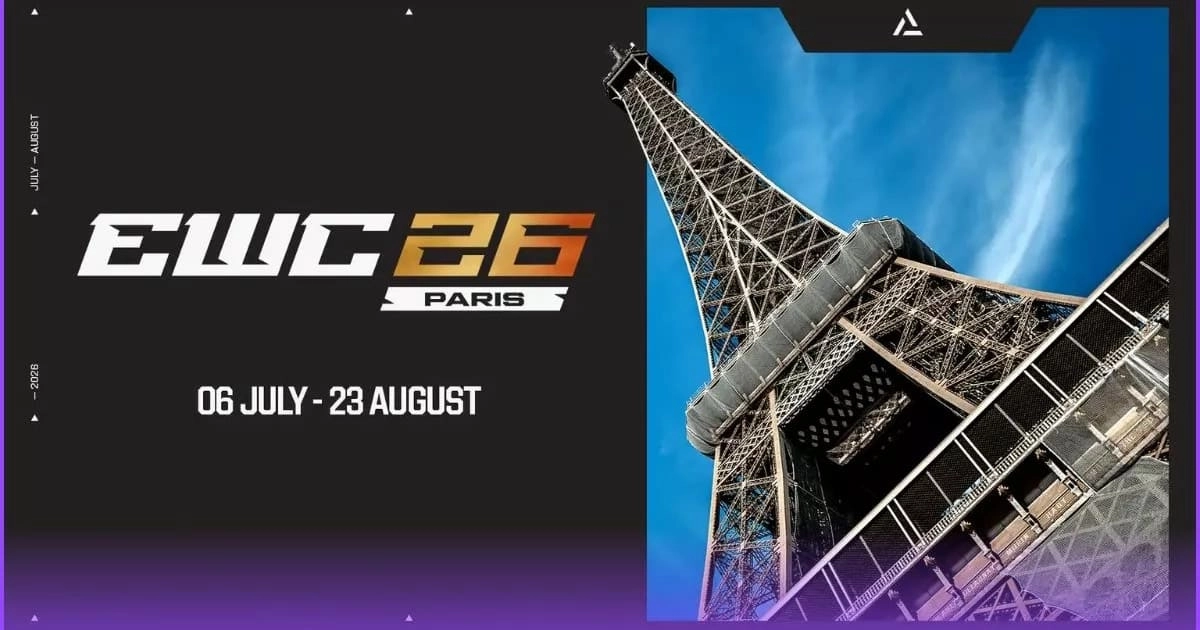
The Esports World Cup 2026, running in Paris from July 6 through August 23 with a $75 million prize pool, has become the first edition of the tournament to allow licensed cryptocurrency firms to sponsor teams and event inventory, after Frances financial regulator cleared the activity under its PSAN framework for registered digital asset service providers. The prize pool itself is up from $71.5 million the previous year, and Coinbase and Bitget have both entered as sponsors under the new rules, with Coinbase reportedly running prediction markets tied to individual match and map outcomes, particularly in the events VALORANT competition.
The regulatory clearance did not happen in isolation. It aligns with the European Unions Markets in Crypto-Assets regulation, or MiCA, which came into full effect across the bloc and has been steadily standardizing how digital asset firms can market, operate and enter sponsorship agreements within EU member states. Frances PSAN licensing regime predates MiCA but now operates alongside it, giving licensed firms a clearer, more defensible legal basis to enter sports sponsorship deals in a major EU market than existed during cryptos earlier, less-regulated sponsorship wave in 2021 and 2022, when several crypto sponsors of sports properties later collapsed or faced enforcement action.
The permitted scope is deliberately narrow. Licensed sponsors can appear on banners, broadcasts and jersey placements, but are explicitly barred from running on-site token activations, token sales or other betting-adjacent promotions at the venue itself. That distinction is the regulatory compromise making the sponsorship category viable again: regulators are permitting brand visibility and marketing spend from licensed, compliant firms while keeping actual token transactions and wagering-like product experiences off the physical event floor, a narrower license than crypto sponsors typically operated under during the categorys first boom.
The strategic significance for the esports industry is that it reopens a sponsorship category that had been in retreat since 2022, when the collapse of FTX and other crypto sponsors left rights holders exposed to reputational damage and, in some cases, unpaid sponsorship commitments. A regulator-sanctioned framework, rather than a rights holders own vetting process, gives event organizers a clearer standard for which crypto sponsors are acceptable, reducing the due-diligence burden and reputational risk that made many rights holders wary of the category after 2022s failures.
For the broader industry, the Esports World Cups move functions as a live test of whether regulated crypto sponsorship can be a durable, rather than cyclical, revenue category for events with young, digitally native, crypto-comfortable audiences. If the model holds through the tournament without incident, expect other European esports and gaming events to pursue similar PSAN- or MiCA-compliant sponsorship structures, and expect the presence of prediction markets tied to match outcomes, currently confined to esports, to draw scrutiny from traditional sports leagues and regulators already wrestling with prediction markets in mainstream sports betting.