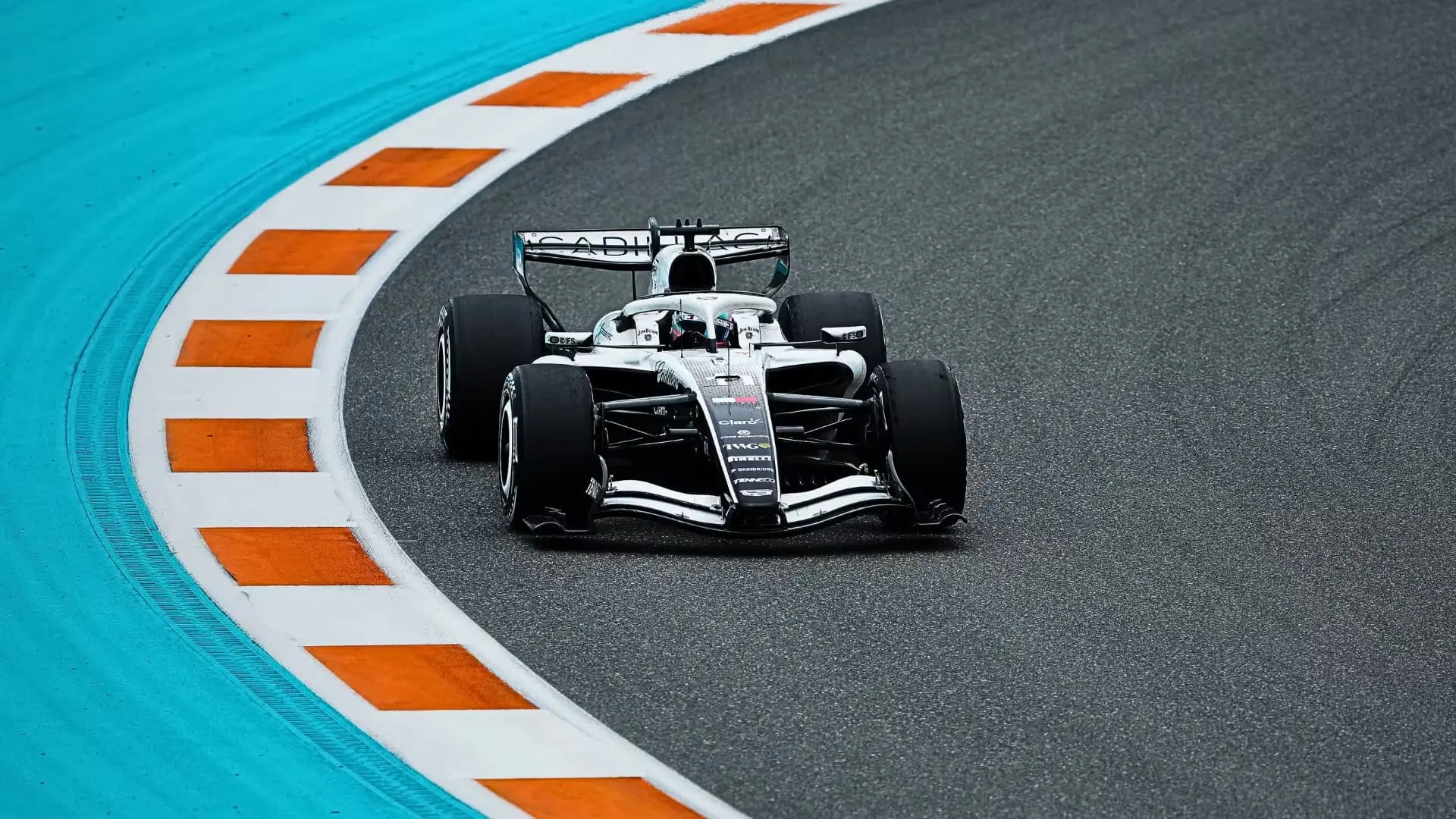
Miami hosted two of US sports most ambitious commercial properties on the same weekend, with the Formula 1 Miami Grand Prix at Hard Rock Stadium and the PGA Tours inaugural Cadillac Championship at Trump National Doral running on overlapping schedules from May 1 to May 3. The contrast in turnout and commercial energy between the two events crystallised the current trajectories of their respective rights holders. The F1 weekend drew an estimated 275,000 attendees across three days at Hard Rock Stadium and was independently modelled to deliver close to $550 million in regional economic impact. The PGA Tours $20 million signature event ran with visibly empty grandstands and absent marquee names including Rory McIlroy, Ludvig Aberg, Wyndham Clark, and Xander Schauffele.
The Miami Grand Prix is now in its fifth running and arrived in 2026 as the first US F1 race carried by Apple TV under the streamers five-year, roughly $150 million-per-year exclusive deal that replaced ESPN. Apple has reported that viewership is materially up on ESPNs prior-year baseline through the first three races, and the Miami round was the Apple platforms largest live-sports event to date, supported by IMAX theatrical screenings in 50 US cities. The Cadillac Championship represents the PGA Tours commercial experiment in the post–LIV settlement environment, attempting to use signature-event purses and a Trump-branded venue to reanchor Floridas tour calendar.
The strategic read is that calendar conflict is becoming a rights-holder problem, not a fan-experience problem. The PGA Tours signature-event model relies on concentrated fields, premium venues, and discretionary fan spending — all of which suffer when a high-attendance, high-spend property such as F1 is staged simultaneously in the same metropolitan area. The typical F1 visitor spends double the typical Miami tourist, according to local economic analysis, and that wallet has limited substitutes during the race weekend. For the tour, scheduling against an event of that gravity exposes the structural difficulty of reasserting golf as a tentpole property in markets where global motorsport now commands the local sponsorship and hospitality ecosystem.
The downstream consequences point to a tougher calendar negotiation for the PGA Tour and to an entrenched advantage for Liberty Medias F1 business in destination markets. Sponsors that activated across both properties — including financial-services and luxury categories — saw clearly better ROI on the F1 side, where corporate hospitality sold out and on-site activation footprint was more than double the golf events. The longer-term question for the PGA Tour is whether the Cadillac Championship can survive in its current calendar slot or whether a structural realignment around F1s expanding US footprint is now unavoidable. For Apple, the Miami numbers will frame the next round of sports-rights investment decisions and validate the price paid for an emerging tentpole.