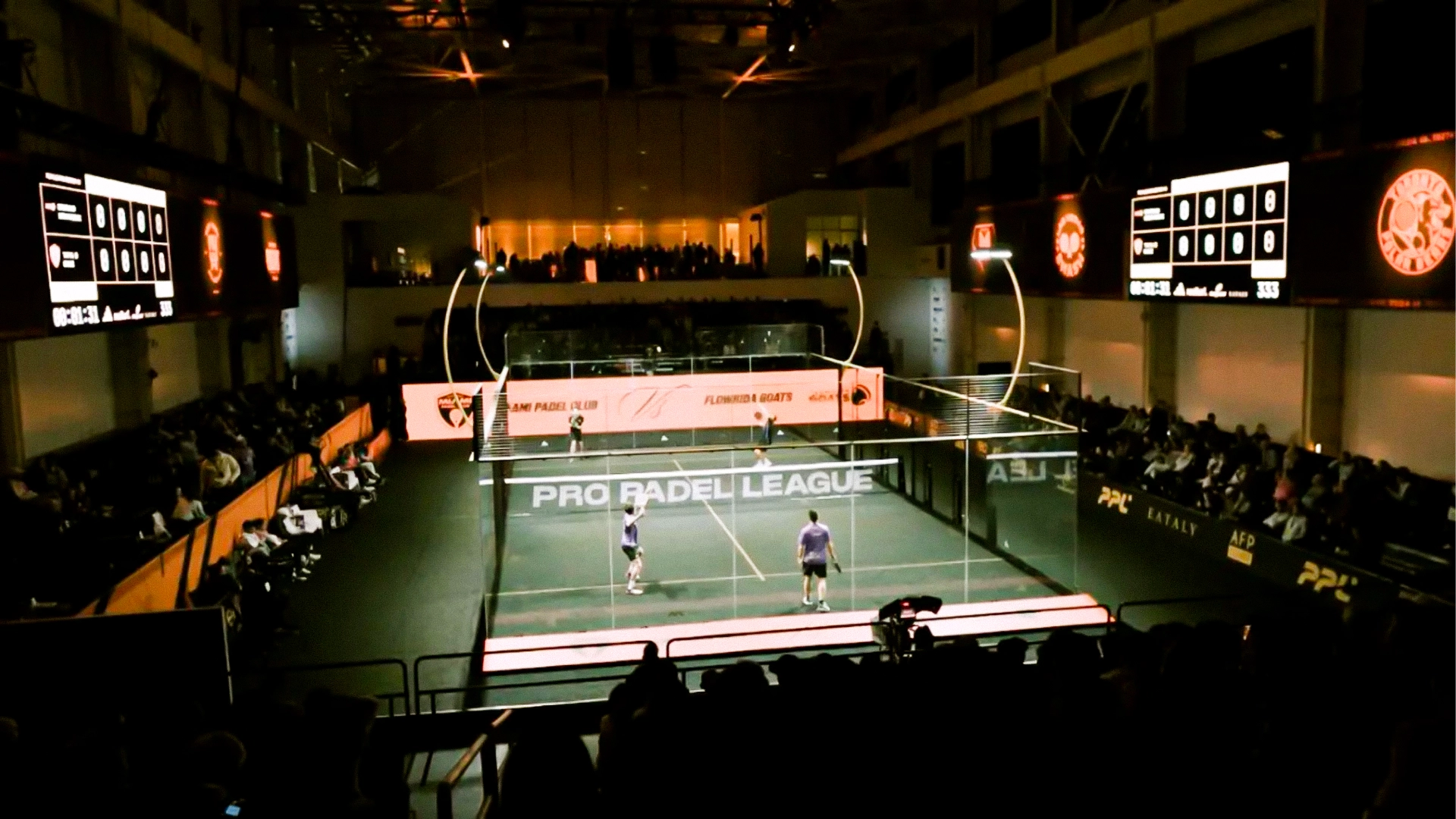
The Pro Padel League closed a $15 million Series A funding round led by Charlotte Hornets co-chairman and governor Rick Schnall, the largest single capital raise in the leagues history and the most material institutional bet to date on padels growth in North America. The round, which closed in late March and continued attracting follow-on commitments through April, also included participation from existing seed investor Left Lane Capital and brings the leagues total external funding to roughly $25 million across its first two rounds.
The PPL launched in 2023 with team entry fees of $200,000. Multiple franchises are now valued above $10 million, a fifty-fold increase in less than three years. Schnall, who is also co-president of private equity firm Clayton, Dubilier amp; Rice, joined the Hornets ownership group with Gabe Plotkin in 2023 and his investment in PPL marks a rare instance of a controlling NBA owner deploying personal capital into an emerging sport league rather than into ancillary basketball ventures. Capital from the round will fund team infrastructure, player development pathways and event production across PPL stops in the United States.
The strategic significance is that institutional and league-adjacent capital is now treating padel as a credible asset class rather than a lifestyle bet. Premier Padel, the FIP-sanctioned global tour, has secured Heineken 0.0 as a global beer partner and added Red Bull, Wilson and NTT Data to its roster, and court counts in the United States have grown from fewer than 100 facilities in 2022 to over 700 today. Schnalls involvement signals that NBA-style ownership expertise — arena operations, media rights packaging, ticketing and sponsorship monetization — is being imported into a sport that has historically lacked sophisticated commercial infrastructure outside Spain and Latin America.
The downstream effect will accelerate competition for media distribution and national sponsorship category exclusivities. The PPL has not yet locked in a linear US broadcast partner, and the league will use the new capital to attract a multi-year rights deal ahead of the LA28 Olympic cycle, where padel is lobbying for inclusion. For investors evaluating second-tier US racket sports, the round establishes a price benchmark that will shape negotiations around pickleball league valuations and any future raise from Premier Padel itself, which has signaled plans for an Asian expansion in 2026 that will require additional capital.