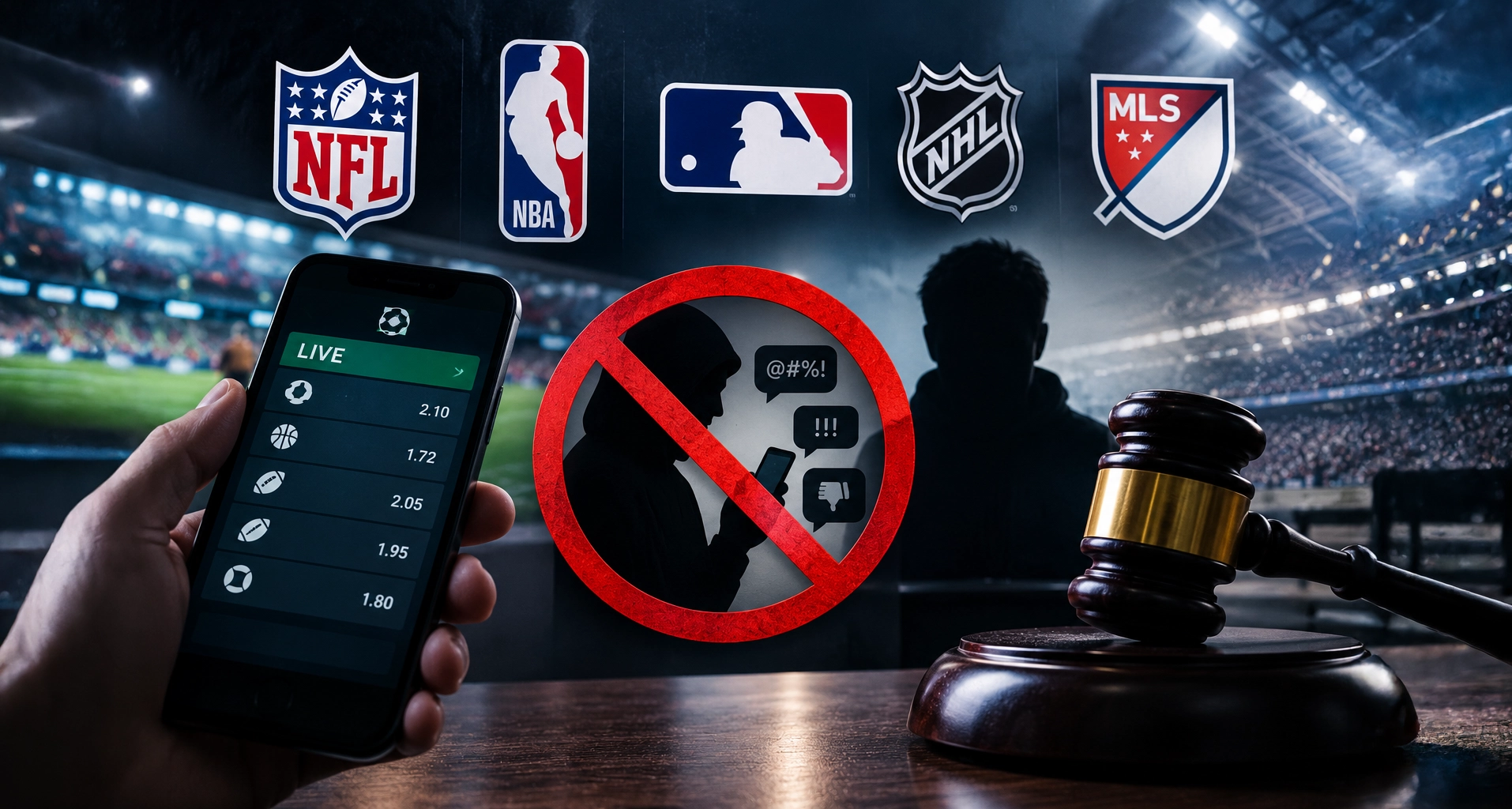
The NFL, NBA, NHL, MLB and MLS issued a joint statement with their respective players associations on 15 September demanding permanent betting bans for individuals who harass or threaten players, coaches, officials or their families. The statement asks state gaming regulators for three specific measures: lifetime exclusion for verified harassers, a streamlined mechanism for players, teams, leagues and unions to report incidents directly to gambling commissions, and proactive monitoring by operators to identify and remove abusive accounts.
The leagues are asking for universal adoption of policies already in force in Ohio, West Virginia, Louisiana and Wyoming, four states that have established permanent exclusion procedures. The context is the volume of abuse attached to proposition betting on individual player performance, which has grown into a substantial share of handle since the repeal of the federal prohibition. Documented cases include NFL kicker Graham Gano receiving weekly death wishes and former Cleveland Cavaliers coach JB Bickerstaff receiving threats referencing his family. The statement declares that the safety and well-being of players, coaches, officials and their families must always come before a wager, and that threatening an athlete or their family over a sports bet crosses a bright ethical and criminal line. The WNBA Players Association was not included. Executive director Terri Carmichael Jackson called the exclusion deeply disappointing, noting that WNBA players experience the same harassment.
The strategic significance lies in who bears the cost. Every league in the statement takes revenue from the operators it is now asking regulators to burden with monitoring, reporting and exclusion obligations. The NFL has commercial relationships with FanDuel, DraftKings and Fanatics; MLB and the NBA carry comparable rosters of operator partners. By routing the demand through state regulators rather than through those commercial agreements, the leagues impose compliance costs on their partners without renegotiating the contracts that pay them. It is a precise piece of positioning: the leagues cannot ban a bettor themselves, so the appeal to regulators converts a reputational liability into someone elses operational requirement while preserving the revenue that created the liability.
The precedent will shape the next cycle of betting partnerships. Operators now face the prospect of fifty separate state frameworks for exclusion and reporting, and the compliance burden falls unevenly on smaller books that lack the monitoring infrastructure of the two market leaders, which quietly favours consolidation. Player-protection obligations are likely to migrate from regulatory demand into contractual terms as league agreements come up for renewal. The WNBPAs exclusion is the more revealing detail, because it indicates that this framework is being built property by property rather than as an industry standard, and that womens leagues generating rapidly growing betting handle are not yet covered by the protections their counterparts in mens leagues are negotiating.