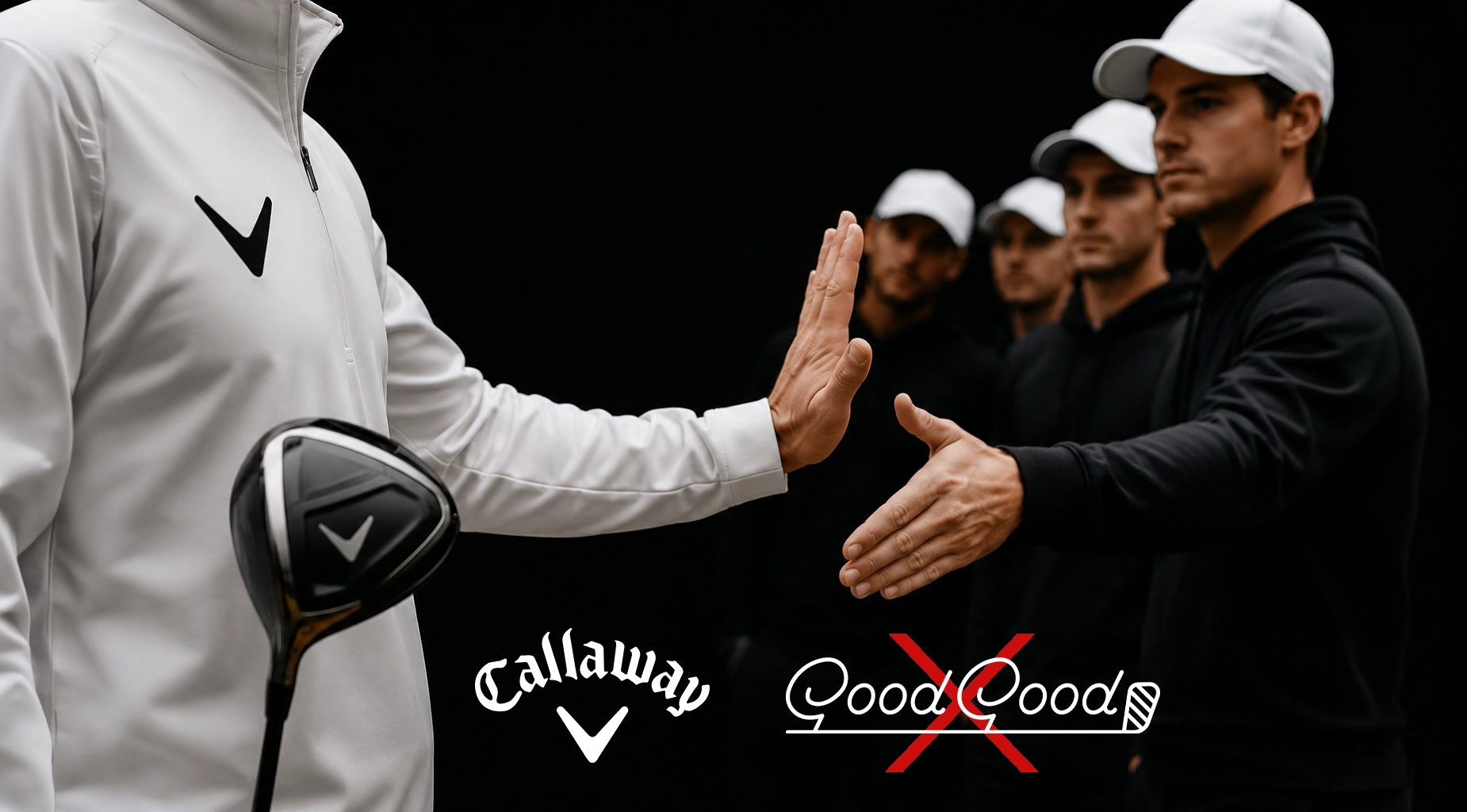
Callaway terminated its partnership with golf media company Good Good on 28 August following backlash to a co-branded driver advertisement in which one of Good Goods founders knocks a female colleague to the ground. Within the same week, Good Good withdrew as title sponsor of a PGA Tour event, Golf Channel cancelled a commissioned series, and Dicks Sporting Goods and Golf Galaxy pulled the companys products from sale.
The 60-second spot showed Garrett Clark shoving Alexis Miestowski away from a golf bag, accompanied by the line Do not touch my new driver. Good Good said the piece was intended as a horror-film parody, removed it and apologised, acknowledging that it did not reflect the companys values. Callaway chief executive Chip Brewer confirmed that Callaway had approved the video before release and said the approval should never have occurred; the company committed $1 million to organisations working to prevent violence against women. Good Good then stepped away from the Austin event scheduled for 12-15 November, a multi-year title sponsorship carrying an obligation of at least $6 million a year, and the tournament will proceed under a new name while the PGA Tour seeks a replacement backer. Tour chief executive Brian Rolapp publicly described Good Goods apology as defensive and late. Chief executive Matt Kendrick initially raised the prospect of suing Callaway before retracting the threat and apologising to the manufacturer.
The commercial exposure here is a function of what Good Good actually is. The company raised $45 million last year in a round led by Creator Sports, with Peyton and Eli Mannings Omaha Productions among more than 50 participating investors, on the strength of more than 1.75 million YouTube subscribers and a four-million-strong social following. Its enterprise value sits almost entirely in the personal audience equity of a small group of on-camera founders, and its revenue depends on partners, retailers and rights holders who each carry their own brand risk. When the asset and the liability are the same people, there is no separation between a creative misjudgement and a balance-sheet event.
The governance failure is the part the industry will act on. This was not creator content that a brand failed to police; it was co-branded advertising that Callaways own approval chain cleared before publication. Sponsors have spent five years moving budget toward creator-led properties precisely because the content feels unmediated, and have generally accepted lighter approval processes as the price of that authenticity. Callaways response, tightening its review procedures while writing a $1 million cheque, concedes that the trade-off was mispriced. Expect approval rights, values clauses and morals provisions in creator agreements to be rewritten accordingly, and expect tour title sponsorships, which put a brands name on a sanctioned event for years at a time, to carry materially stricter vetting for creator-economy companies whose audience is inseparable from a handful of individuals.