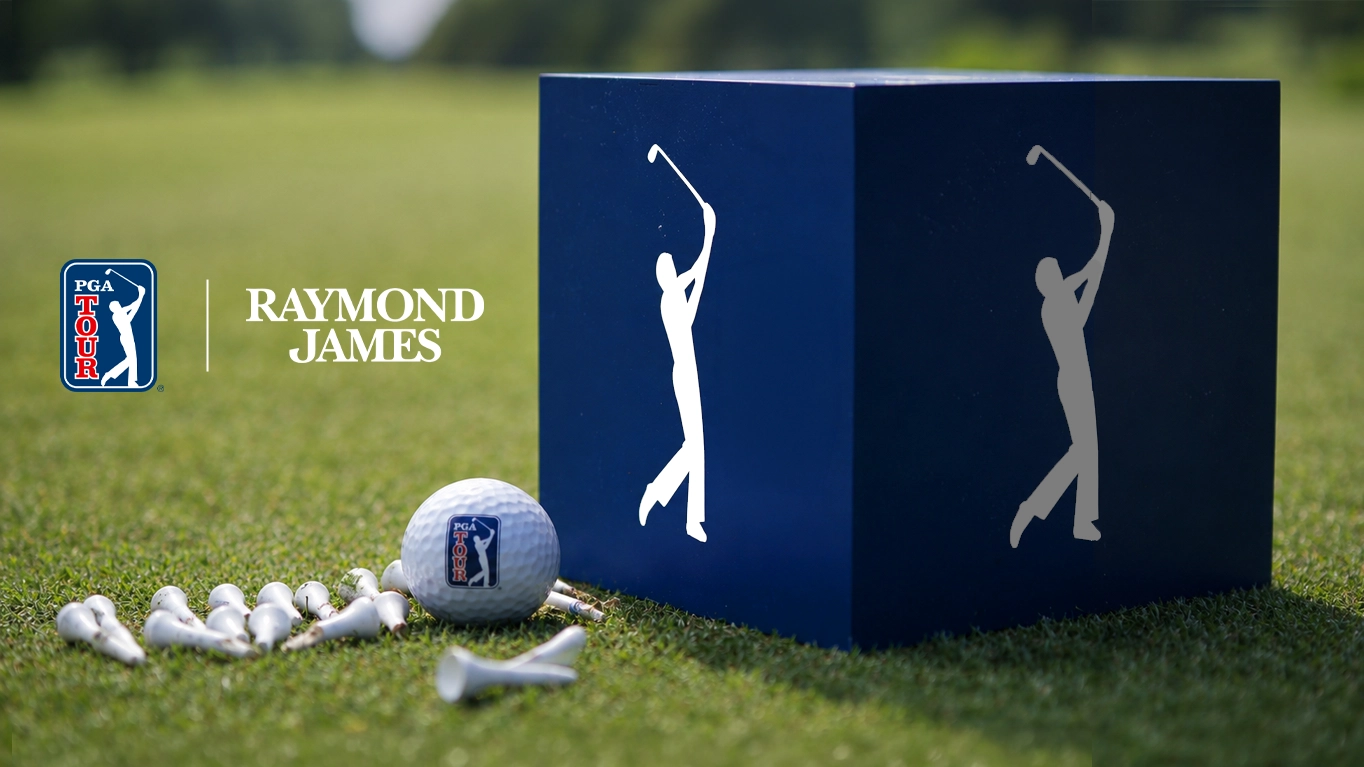
The PGA Tour announced on 12 August that Raymond James will become title sponsor of its Greensboro event at Sedgefield Country Club under a multi-year agreement, replacing Wyndham Hotels and Resorts after roughly two decades. The tournament will be staged from 2 to 8 August 2027 with coverage on CBS and Golf Channel, and will move into the Tours Championship Series in 2028 with a minimum purse of 20 million dollars.
The agreement is the first visible pricing signal from the commercial restructure the Tour will implement in 2028, which sorts its schedule into tiers rather than presenting sponsors with a largely undifferentiated calendar. Sports Business Journal reported on 10 August that a Championship Series title position now costs upward of 30 million dollars a year, against five to fifteen million for the Challenger Series below it. That spread, rather than the identity of any single sponsor, is the disclosure that matters: the Tour has moved from selling weeks to selling graded inventory with published price points, and it has done so at a moment when its most valuable long-term contract is unresolved. FedExs title agreement, worth 650 million dollars over ten years, expires after the 2027 season, taking with it the naming rights to the FedEx St. Jude Championship in Memphis, a market that loses its Championship Series event in 2028. The Tours chief commercial officer, Dhruv Prasad, has said the circuit is in active discussions with FedEx; the company has pointed to a four-decade relationship without committing to renew.
The strategic question underneath the tiering is whether a season-long championship remains a single-sponsor asset. FedEx has contributed more than a billion dollars in prize funding since 2007, and the 2026 bonus pool sits near 100 million dollars, with 40 million distributed at the Tour Championship. Fragmenting that position into multiple sellable categories, on the model NASCAR adopted when Sprints title sponsorship ended, would convert one large renewal risk into several smaller ones and open the property to brands that cannot absorb a nine-figure commitment. It would also dilute the clarity of a competition format the Tour has spent two decades teaching audiences to follow.
The category rotation is equally instructive. A hospitality brand is exiting and a financial services firm is entering, which is the pattern across premium American sports inventory as sponsorship budgets shift from consumer awareness toward business-to-business relationship building, where golfs audience composition is its strongest asset. The same logic is visible on the European side of the sport, where European Tour Group appointed Fanatics as exclusive retail and licensing operator for the DP World Tour and the European Ryder Cup on 18 August, placing a European golf property inside the merchandising infrastructure built for North American leagues. The PGA Tour holds a 30 per cent stake in the DP World Tour and will read that deal as a template. With LIV Golfs funding unresolved and the salary pressure it created receding, the Tour is repricing its commercial base at the most favourable moment it has had since 2022.