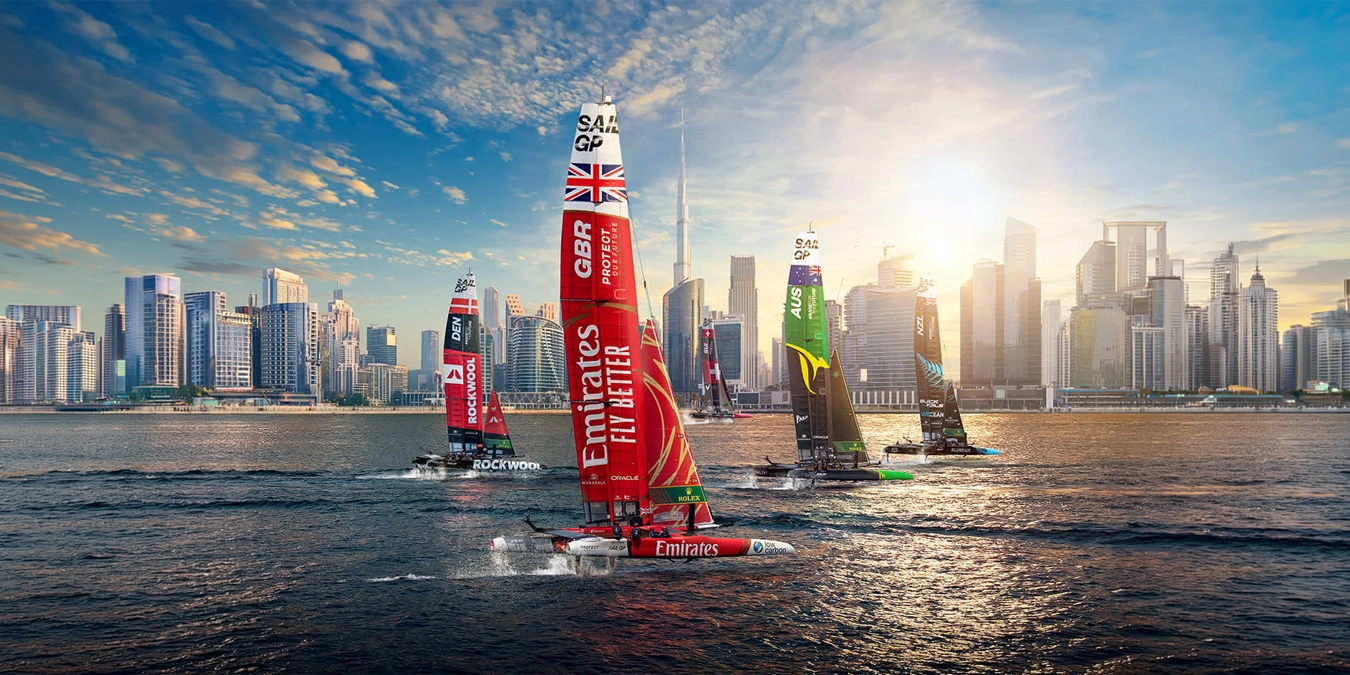
SailGP enters the second half of its 2026 season, a 13-nation campaign carrying a $12.8 million total prize purse, coming off American Magics acquisition of the Danish Rockwool Racing team for $60 million, the highest valuation recorded in the leagues history.
Founded by Larry Ellison in 2018, SailGP has moved from a centrally owned circuit toward a franchise model: 12 of its 13 teams are now privately owned, with valuations climbing from an initial $5 million per team to eight-figure sums as the league has matured. The circuit also secured a new multiyear media rights extension with CBS Sports, run by David Ellison, guaranteeing more than 50 hours of coverage per season across CBS platforms through 2027, the first agreement of its length in the leagues history. The season includes stops such as the Germany Sail Grand Prix in Sassnitz on August 23 and 24, part of a calendar spanning Januarys Perth opener through late November.
SailGPs shift toward private team ownership mirrors the franchise economics that reshaped leagues like Formula E and the NWSL: centralizing broadcast and commercial rights at the league level while selling team equity to outside capital lets the circuit raise money for global expansion without relying solely on Ellisons balance sheet. The $60 million Rockwool sale, more than ten times the leagues original per-team valuation, indicates investors are pricing in SailGPs fixed-cost F50 catamaran format, which caps technical spending and makes franchise economics more predictable than in traditional yacht racing, plus the multiyear CBS deal that gives owners visibility into future media revenue. That combination—cost-controlled competition plus secured distribution—is precisely the model private equity has favored in other emerging leagues.
The Americas Cup, whose F50 catamarans trace their design lineage to the 2017 Cup cycle, is expected to hold up to three preliminary regattas in 2026, and the overlap in technology and sponsor relationships between the two properties means SailGPs rising franchise values could pull additional investment toward Cup syndicates as well. For sports investors more broadly, SailGPs trajectory offers a test case for whether a sport with a small global fan base can still generate franchise appreciation through cost discipline and a strong media partner, a model increasingly relevant as capital searches for growth sports beyond football, basketball and American football.
The CBS agreement also matters strategically because it ties SailGPs US distribution to a broadcaster under Ellison family influence, reducing the negotiating friction that has slowed media deals at other emerging leagues reliant on arms-length rights holders. Owners who bought into teams at eight-figure valuations are effectively betting that guaranteed CBS airtime through 2027, combined with a fixed-cost boat platform, will keep valuations climbing toward the next scheduled rights renewal, making SailGP one of the clearer examples of a sports property actively engineering its own value appreciation rather than waiting for organic audience growth to drive it.