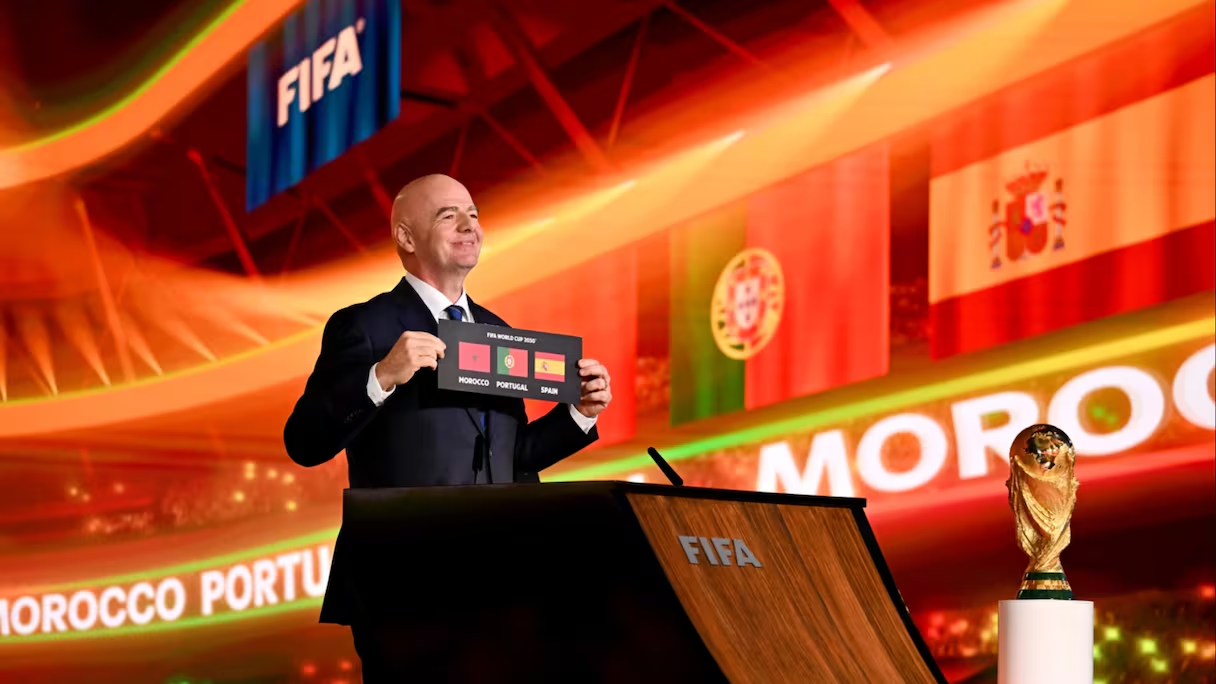
FIFA has formally opened the tender for US and Puerto Rico media rights to the 2030 mens World Cup, with bids due by November 19 and a decision targeted before the end of 2026. Bidders may also submit combined offers covering the 2034 tournament in Saudi Arabia, and FIFA has said it prefers to place English- and Spanish-language rights with a single partner, although separate, joint and TV-plus-streaming bids are still admissible.
The process is the first open sale of US mens World Cup rights since 2011. Fox, FIFAs English-language partner for the last three cycles, secured 2026 without an open auction after FIFA renegotiated its agreements following the rescheduling of Qatar 2022, paying a reported $485 million. NBCUniversals Telemundo held the Spanish-language rights. Both performed strongly: Fox drew 42.5 million viewers for the Argentina–Spain final, while Telemundos platforms averaged 6.3 million across the tournament and around 24 million for the final. FIFA chief business officer Romy Gai confirmed that neither incumbent received an exclusive negotiating window. Media executives cited by CNBC in July valued the rights at $1.5 billion to $2 billion; The Wall Street Journal reported FIFA could seek up to $4 billion across 2030 and 2034.
The single-partner preference is the decisive design choice. It turns a two-language market into one asset and rewards groups able to serve both audiences at scale. NBCUniversal is structurally best placed: it already pairs NBC and Telemundo on the Premier League and the Olympics, and a Telemundo executive told Sports Business Journal the company is beyond exploring a package bid. Foxs Spanish-language operation is considerably smaller, and ESPN, whose chairman Jimmy Pitaro said Disney is of course interested, would need ESPN Deportes to carry equal weight. The structure also suits streamers reported as interested, including Netflix, which already holds US rights to the 2027 and 2031 Womens World Cups, and Amazon, which can serve both languages on one platform.
The tender carries scheduling variables that affect valuation. Gai said FIFA has not decided whether hydration breaks will feature in 2030, which he said would significantly affect advertising inventory, and that FIFA is concretely considering moving 2034 to winter. A late-year 2034 tournament would collide with the NFL season and the European club calendar, complicating the economics for any US network already committed to football. For the wider market, the outcome will show whether the World Cup still commands a premium as a four-yearly event when US rights budgets are concentrated on year-round league inventory, and whether FIFAs bundling strategy maximises revenue or simply narrows the field of credible bidders.