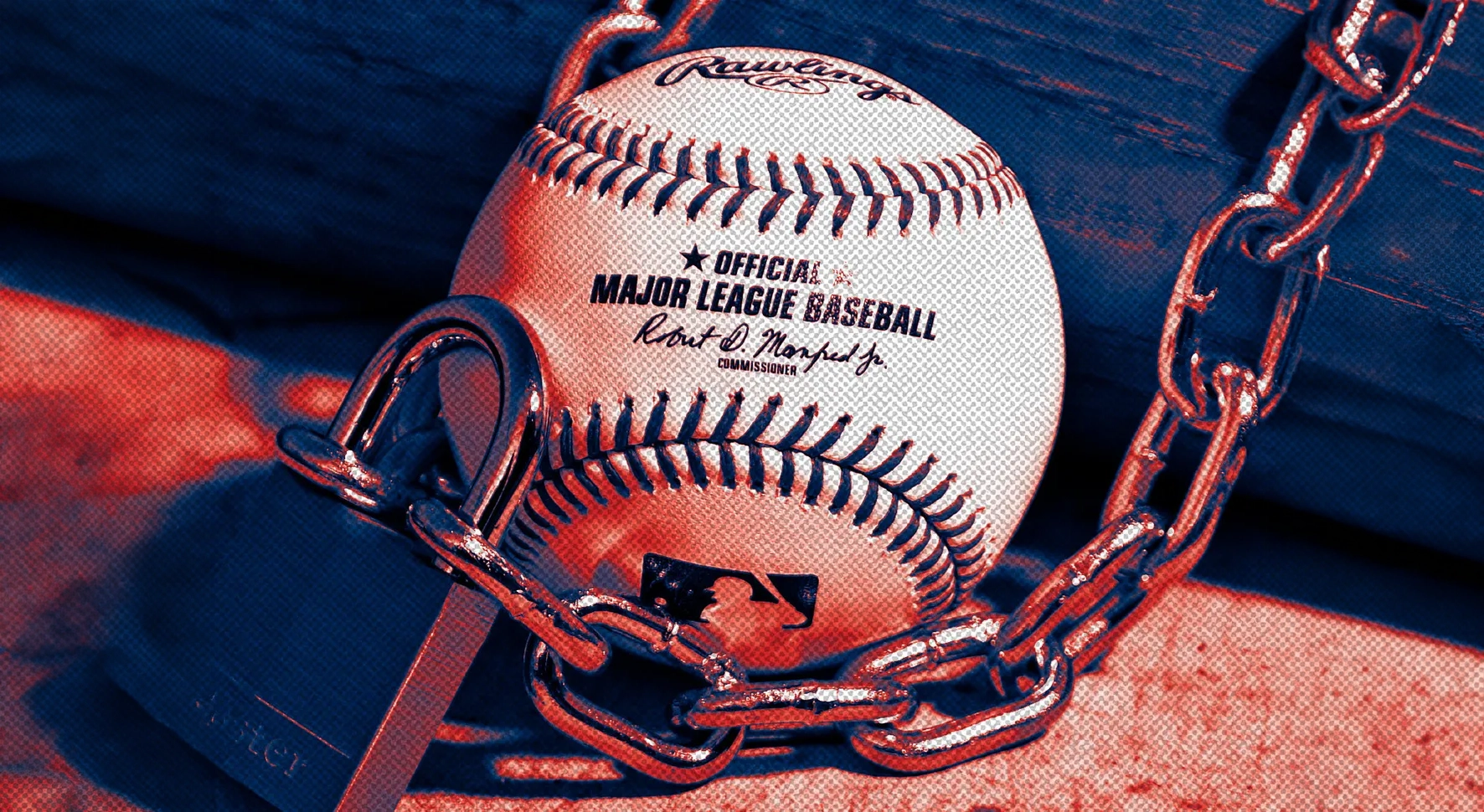
Major League Baseballs national media rights agreements contain a clause that would extend them by one year, into 2029, if a lockout next season causes the cancellation of at least 60 games per team. Under the provision, reported by Andrew Marchand and Evan Drellich of The Athletic, rightsholders would continue paying the league for the 2027 season even if no games were played, and would receive the additional year of rights at no further fee as compensation.
The clause sits inside the short-term national deals MLB signed ahead of this season with ESPN, NBC Sports, Netflix, Fox Sports, TNT Sports and Apple. It is not known which of those agreements carry the extension. The context is the collective bargaining agreement between the league and the players union, which expires on 1 December, with a lockout widely anticipated. The league has tied its demands on salary structure, including a proposed cap and floor, to resolving television blackouts and centralising local media revenue. Local contracts are treated differently: most regional agreements, which cover roughly 125 to 145 games per club each year, would be adjusted on a pro-rata basis for games not played rather than extended.
The asymmetry between the national and local treatment is the point worth understanding. In a work stoppage that wipes out 60 or more games per club, the leagues central media income holds while club-level regional income falls in proportion to the games lost. MLB has effectively converted its national broadcasters into involuntary lenders, receiving 2027 cash for a season that may not exist and repaying it in inventory two years later. For owners, that materially changes the cost of a lockout. The single largest revenue line at the league level becomes insensitive to games played, which removes much of the financial urgency that has historically pushed both sides toward settlement before the season is lost.
For the rightsholders, the structure is less benign than the no-additional-fee framing suggests. An extra year of rights in 2029 is not equivalent to a delivered 2027 season. Advertising inventory cannot be banked, subscription churn triggered by a blank schedule cannot be reversed by a future season, and platforms such as Netflix and Apple, which bought baseball partly as an acquisition and retention tool, would be paying for a product they cannot put in front of subscribers. The value transfer runs toward the league, and the fact that six sophisticated buyers accepted it indicates how little leverage individual bidders hold in a fragmented rights market where each holds a narrow package rather than a controlling position.
The precedent matters beyond baseball. Leagues negotiating through labour uncertainty now have a template for shifting stoppage risk onto media partners, and broadcasters will price future deals accordingly, either by discounting fees or by demanding pro-rata protections of the kind MLBs regional partners already have. It also sharpens the read on the 2027 CBA itself: a league that has pre-funded a lockout is a league that has prepared for one, and the media architecture now signals owner intent more clearly than any public bargaining position.