
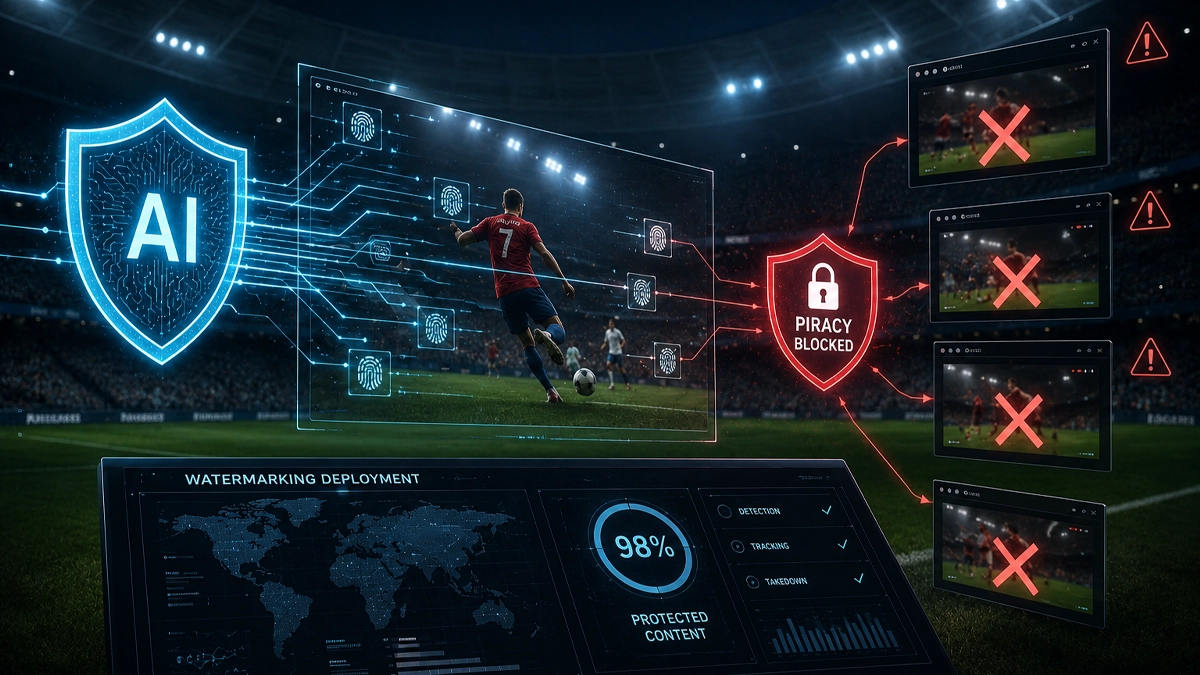
Forensic watermarking technology powered by artificial intelligence is achieving mainstream adoption across premium live sports streaming platforms, enabling real-time identification and shutdown of illegal stream redistribution within minutes of content leak detection. Irish anti-piracy specialist Stegawave and comparable technology providers have deployed proprietary watermarking algorithms embedding invisible, personalized identifiers within live video feeds, allowing piracy sources to be traced to individual subscriber accounts and shut down through coordinated action with streaming platforms and law enforcement authorities. The technology represents a structural shift in how sports media rights holders defend against content piracy and revenue leakage associated with illegal livestream redistribution.
Premium live sports—basketball, American football, soccer/football, cricket—remain primary piracy targets, with aggressive gatecrasher restreaming and simulcasting operations diverting substantial revenue from legitimate broadcasters and rights holders. Industry estimates suggest that piracy-related content leakage costs global sports media rights holders billions of dollars annually, with impact concentrated on high-value properties including professional sports finals, championship events, and international tournament competitions. Traditional content protection mechanisms—DRM encryption and access control systems—prevent account-based access but cannot prevent screen capture and unauthorized redistribution by individual subscribers.
The AI watermarking innovation addresses this foundational vulnerability. Forensic watermarking embeds imperceptible information within video signals, rendering watermarked content identifiable regardless of screen capture, re-encoding, or compression. Combined with AI-driven detection algorithms, watermarked content leaks can be identified and traced to source subscriber within hours, enabling rapid account termination and legal action against repeat offenders. The technology creates material friction for industrial-scale piracy operations, as coordinated shutdown mechanisms now operate within minutes rather than days, reducing illegal livestream availability window and deterring investment in restreaming infrastructure.
The strategic implications for media rights holders and streaming platforms are substantial. Rights holders can now credibly demonstrate to institutional broadcasters and premium subscribers that content protection investments have achieved measurable efficacy in preventing redistribution. Streaming platforms can differentiate their services through advertised anti-piracy capabilities, addressing subscriber concerns about content availability and quality. The combination of DRM, forensic watermarking, and AI-driven monitoring creates a layered protection architecture substantially reducing piracy incentives compared to traditional single-layer content protection. For rights holders, AI watermarking deployment enables acceleration of streaming distribution without proportionate increase in piracy-related revenue loss, facilitating media rights model transitions from traditional broadcast to streaming-native architectures.