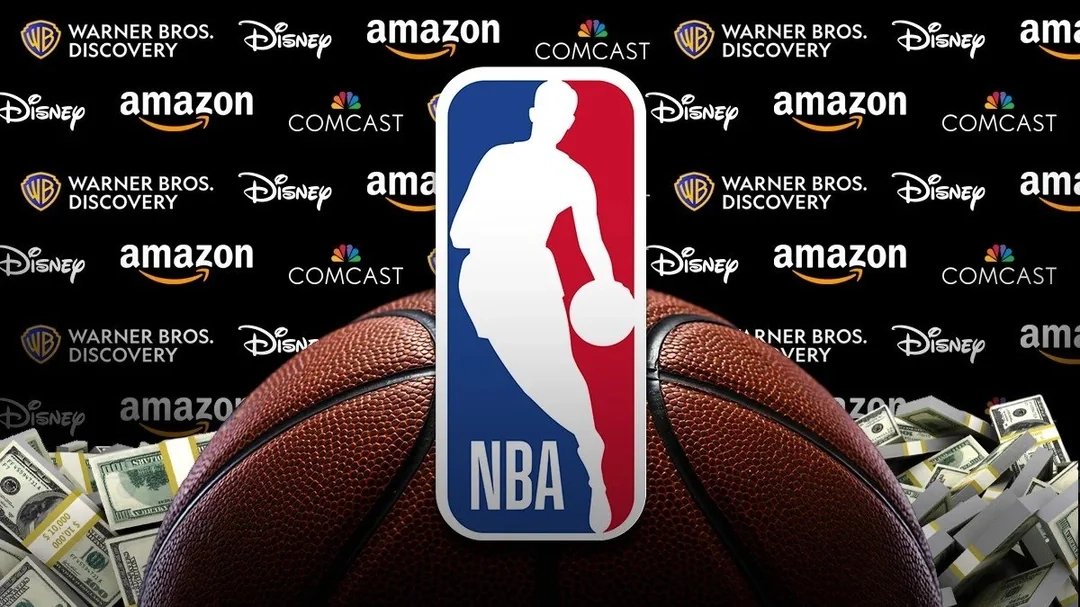
The NBA is now one full season into its 11-year media rights agreement with The Walt Disney Company, NBCUniversal and Amazon Prime Video, a package reportedly worth $76 billion that runs through the 2035-36 season and ends the leagues three-decade partnership with Warner Bros. Discoverys TNT.
The agreement replaced a deal that had anchored NBA distribution since 2002. Disneys ESPN and ABC hold the largest share, paying an estimated $2.6 billion annually for a package that includes 80 regular-season games, with at least 20 airing on ABC and all five Christmas Day games remaining on ESPN/ABC. NBC returned to NBA coverage for the first time since 2002, while Amazon Prime Video became a rights holder for the first time. The two companies will alternate coverage of one Conference Finals series each year. The overall value represents roughly a 160 percent increase in average annual value compared with the prior contract. The agreement followed the leagues rejection of a $1.8 billion-per-year renewal offer from Warner Bros. Discovery, which subsequently pursued legal action over matching rights before the dispute was resolved and TNT ended its NBA coverage after 35 years.
The restructuring illustrates how decisively the NBA has moved its live product away from a single cable home and into a three-way split among a legacy broadcaster-cable hybrid and two streaming-first platforms. For the league, spreading rights across ESPNs linear and app ecosystem, NBCs Peacock service and Amazons Prime Video subscription base diversifies revenue risk and reduces dependence on any single partners negotiating leverage in future cycles. It also signals that live sports remains one of the few content categories capable of commanding premium price increases even as linear pay-TV subscriptions continue to decline, reinforcing why leagues are willing to trade the simplicity of a unified broadcast home for higher aggregate rights fees.
The deal has immediate consequences beyond the NBA. Warner Bros. Discovery lost its flagship live-sports property and has had to recalibrate its sports strategy around other assets, including its remaining college and international rights. The $76 billion benchmark also raises the floor for upcoming negotiations across the sports industry, giving other leagues, including MLB and the NHL, a reference point for how much streaming entrants are willing to pay for exclusivity or co-exclusivity. Finally, the fragmentation of NBA games across three distinct platforms tests whether fans will tolerate multiple subscriptions to follow a single league, a question that will shape how aggressively other rights holders pursue similar multi-platform structures in their next cycles.