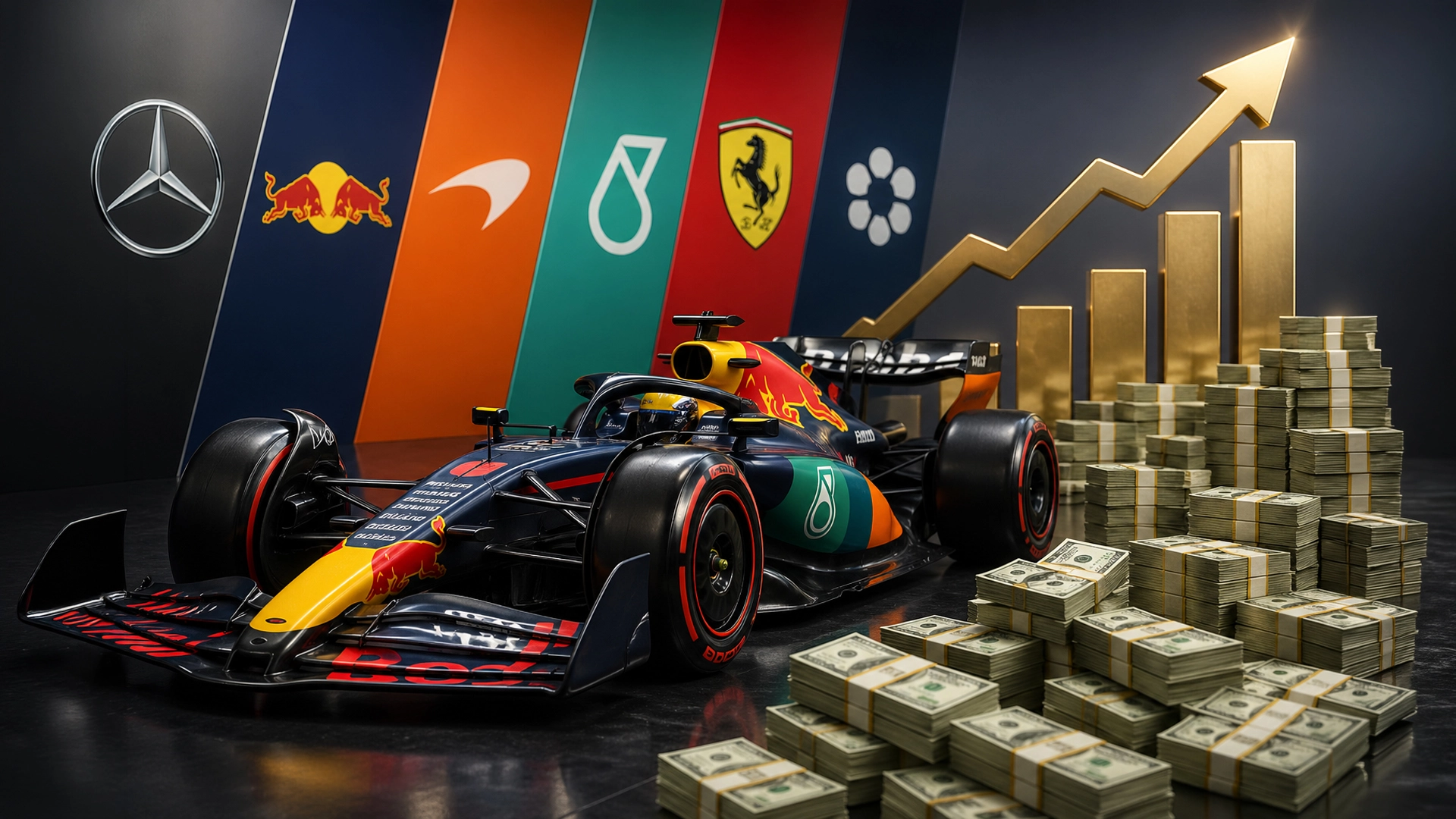
Total global Formula 1 sponsorship investment is on track to exceed $3 billion for the 2026 season, the first time the championship has crossed that threshold, as a wave of multi-year title and technology deals confirmed across the spring settled the commercial picture for the eleven-team grid. Oracles renewal with Red Bull at approximately $110 million per year, Ferraris HP partnership at around $100 million, McLarens rebranding as McLaren Mastercard with a deal estimated at $90 million annually, and Aramcos $75 million arrangement with Aston Martin together set a new floor for the sports premium title slots.
Technology brands now account for roughly $565 million of total category spend, extending their lead over financial services as the largest sponsorship vertical in F1. Eight artificial intelligence partnerships have been signed in the past six months, including deals involving Groq, Meta AI and Anthropic, alongside Lenovos role as official technology provider for the F1 Sim Racing World Championship. The arrival of Cadillac as the eleventh team, backed by General Motors and TWG Motorsports with a portfolio that already includes Tommy Hilfiger, Jim Beam, Tenneco and Gainbridge, has expanded the sponsorship inventory by roughly nine percent in a single season.
The strategic reading is that F1s revenue base has structurally rebalanced. Title sponsorship has become a core line item for teams operating under the $135 million cost cap, with category-exclusive deals priced as essentially uncapped operating subsidies. The cap forces teams to convert sponsorship into marketing, hospitality and capital expenditure rather than performance spending, which has redirected commercial sales toward technology partners willing to fund operational infrastructure in exchange for branding and data access. The result is that the F1 grid is now closer in commercial logic to a B2B technology platform than to a traditional racing series.
The downstream consequences will reach across motorsport. MotoGP, now under Liberty Media ownership, will use the F1 sponsorship benchmark to reset its own title-sponsor pricing as it negotiates renewals through 2027. Formula E, IndyCar and Le Mans organizers face a tougher market for tech-category dollars now concentrating on F1, and rights holders will need to differentiate on category exclusivity windows or geographic reach. For brands, the $3 billion threshold signals diminishing arbitrage value in F1: every year of double-digit growth brings the sport closer to NFL-style pricing without the addressable US audience, and category competition is intensifying enough that latecomers will find the most valuable sponsorship slots locked up in five-year deals.