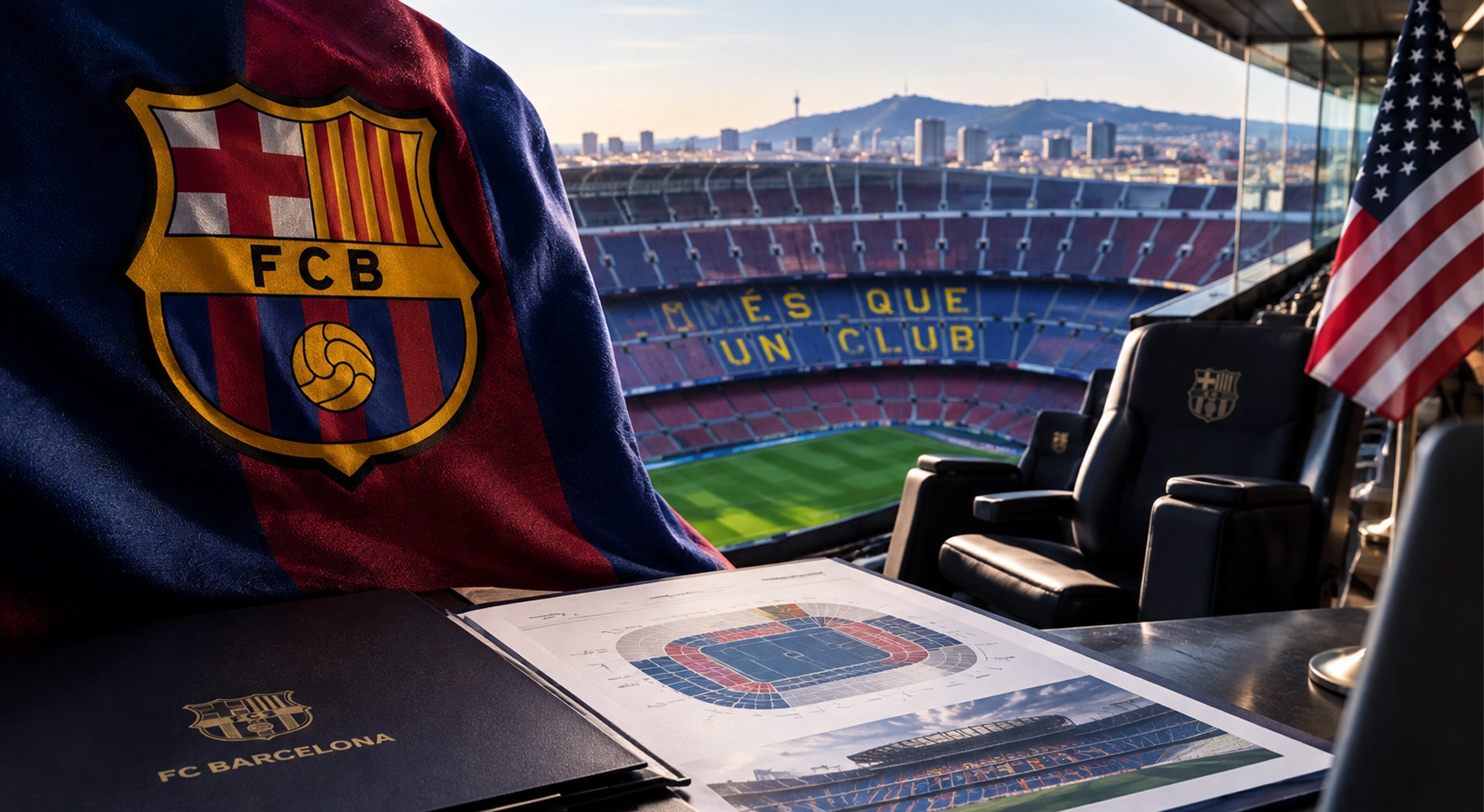
FC Barcelona has launched VIP seat licences at Spotify Camp Nou on 15-year and 30-year contract terms with payment made upfront at signing, projecting approximately €700m in committed revenue across that horizon. The programme, developed with strategic partner Legends Global, puts 2,000 VIP seats on the market. An earlier commercialisation phase sold close to 5,000 seats, generating more than €380m in committed revenue under varying contract durations, and suites and boxes at the stadium are fully commercialised. The club expects to sell the remaining inventory over roughly two and a half seasons.
The structure is a personal seat licence in substance, a financing instrument that has long been standard in North American stadium development and almost unused in European football. Legends Global has worked with Barcelona since December 2022, originally as Legends International, and the model it has imported converts premium hospitality from an annually renewed sponsorship-style product into a capital transaction: the buyer pays once for a multi-decade entitlement, and the club receives cash on signature rather than across the life of the contract. Barcelona described the proposition as combining sport, entertainment, gastronomy, exclusive services and differentiated experiences with the aim of setting new standards in sports hospitality.
What makes this consequential is the balance sheet function, not the hospitality product. Barcelona has spent four years financing the Camp Nou redevelopment through instruments that trade future income for present liquidity, and the seat licence is the cleanest version of that trade yet: contractually committed revenue, collected upfront, secured against inventory the club cannot otherwise monetise for decades. A 30-year licence paid at signing is closer to a pre-sold bond than a ticket. It also transfers risk to the buyer, who assumes three decades of exposure to the clubs competitive performance, the stadiums condition and the value of a seat in 2056, with no annual repricing mechanism in the clubs favour either.
The competitive implication for European football is that premium inventory is being repriced as a capital asset rather than a recurring revenue line. Clubs with new or redeveloped stadiums, and the appetite to sell decades of access at once, can raise sums comparable to a media rights cycle without regulatory approval, league consent or equity dilution. That is an advantage available disproportionately to the largest clubs, since a 30-year commitment is credible only from an institution buyers expect to exist and compete in 30 years, which widens rather than narrows the gap in European footballs revenue distribution.
For the industry, the read-through runs in two directions. European clubs now have a validated template for US-style venue financing, and the American operators who built that expertise, Legends among them, have a European market for it that barely existed five years ago. Expect the model to appear next at clubs with stadium projects and constrained balance sheets, and expect regulators and financial monitoring bodies to examine how multi-decade upfront receipts are recognised in the accounting periods that determine compliance.