
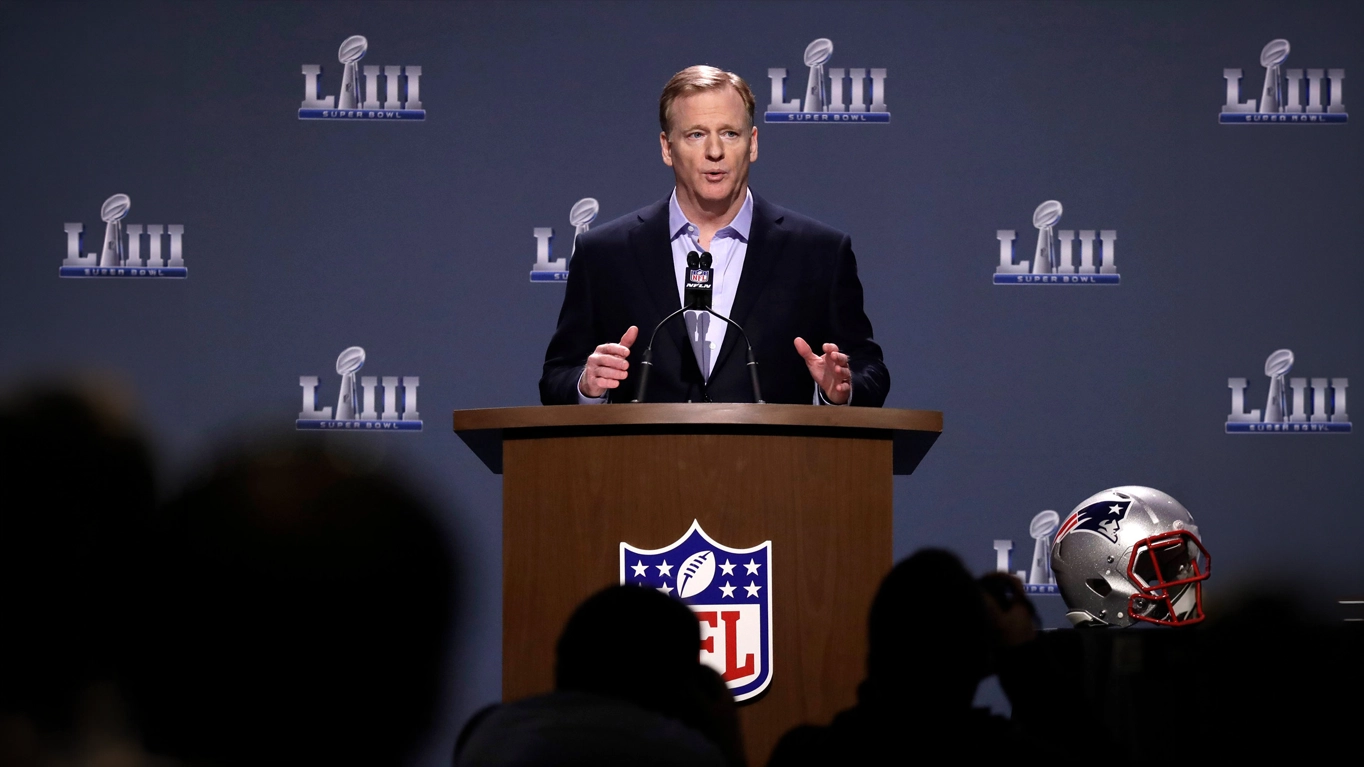
Roger Goodell told German broadcaster RTL/ntv on 18 August that he has no doubt the NFL will eventually field teams based outside the United States, the most explicit statement the commissioner has made on permanent international franchises. The remark landed as the league prepares to stage nine regular-season games across eight countries during the 2026 season.
The NFL has spent nearly two decades converting overseas exhibitions into a structured commercial programme. What began as a single annual fixture at Wembley in 2007 now spans the United Kingdom, Germany, Brazil, Mexico, Spain and Ireland, underpinned by the Global Markets Program, which assigns individual clubs commercial and marketing rights in designated foreign territories. Owners have already approved expanding the international slate to as many as ten games beyond 2026, and league executives have repeatedly identified sixteen, one per club, as the eventual ceiling. Read against that trajectory, Goodells comment is less a prediction than a statement of direction for a programme approaching the limits of what its current format can generate.
The distinction that matters commercially is between touring games and resident franchises, because the two monetise in fundamentally different ways. An international fixture is a scarcity product. It sells one high-margin event, lifts local broadcast ratings for a weekend and produces a merchandising spike, but the revenue it creates is captured centrally and shared across all 32 clubs. A resident franchise generates local revenue the club retains: season tickets, suites, stadium naming rights, regional sponsorship and an in-market commercial rights position no touring model replicates. That is the revenue line the league has been unable to grow abroad, and it explains why the conversation keeps returning to franchises rather than simply to more games. The obstacles are equally structural, spanning travel load and competitive equity, cross-border tax treatment of player compensation, currency exposure, and a collective bargaining agreement drafted for a domestic footprint.
Valuation dynamics sharpen the calculation. Arctos Partners agreed this month to acquire ten per cent of the Atlanta Falcons at a valuation of 10.6 billion dollars, up from eight billion in September 2025. At those multiples, an expansion or relocation into a large European market would be priced against the scarcity of NFL equity rather than against the commercial history of American football in that territory, an asymmetry that favours the league and its owners. Private capital now sitting inside the ownership structure has a direct incentive to see that gap closed sooner rather than later.
For the wider industry the signal is competitive as much as operational. European stadium operators, broadcasters holding NFL rights and domestic football properties are all being asked to plan around a US league that intends to occupy calendar space, premium inventory and sponsorship budget in their home markets on a permanent basis. The NBA has been evaluating a European competition using similar logic. Whichever league establishes a resident presence first sets the template, and the price, for every American property that follows.